

Personal Tracking System UAE: A Business Buyer Guide
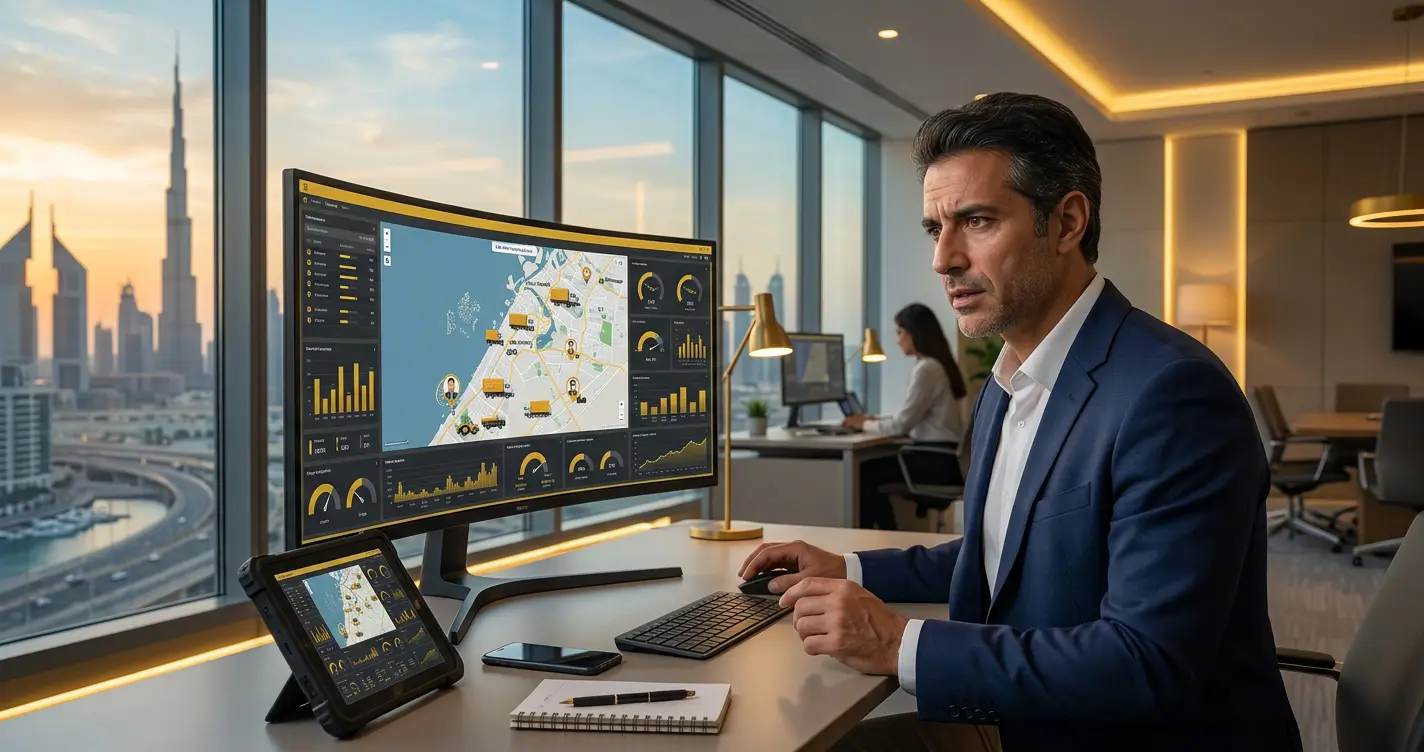
Struggling to keep track of field staff across the UAE? When employees work across customer sites, construction areas, or remote locations, phone calls alone cannot always confirm where they are or whether a site visit was completed. A personal tracking system can provide live location, movement history, geofencing, and SOS alerts, depending on the device and platform. But choosing the right system means looking beyond the tracker itself. This guide covers the key features, costs, privacy considerations, and questions UAE businesses should consider before buying.
What Is a Personal Tracking System?
A personal tracking system helps a business monitor the location and movement of employees who work away from a fixed office. Depending on the solution, it may use a GPS tracker, wearable device, smartphone app, or tracking badge. Location data is then sent to a platform that managers can access from a computer or phone.
It is different from other types of tracking:
- Personal tracking: Monitors the location of employees or field workers.
- Vehicle tracking: Follows the location and movement of cars, trucks, buses, or other vehicles.
- Asset tracking: Helps businesses locate equipment, tools, or other valuable assets.
For UAE businesses, personal tracking is mainly useful when employees work across multiple locations. Common reasons for using it include:
- Staff safety: Know where lone or mobile workers are and receive alerts when help may be needed.
- Site visit verification: Check whether employees reached assigned locations.
- Team coordination: See where field staff are when assigning or managing jobs.
The right system depends on what your business needs to monitor, how often you need location updates, and how your employees will use the device.
Which Businesses Can Benefit?
Not every company needs this. These are the ones where the case is usually clearest.
1. Field service and maintenance teams
An AC maintenance company with thirty technicians can see which technician is closest to an urgent call instead of phoning around. Jobs get assigned faster, and customers wait less.
2. Security and facility management
Guard patrols can be compared against a planned route. If a guard remains stationary for an unusual period, the control room can check whether help is needed.
3. Construction and industrial sites
A contractor with hundreds of workers on a large site may need to know who is inside which zone during an emergency. That matters more than any productivity report.
4. Lone workers
Inspectors, surveyors and night staff often work alone. A device with an SOS button can send an alert to a designated contact when help is needed.
5. Schools and transport operators
Some operators track supervisors and drivers on routes so pickup times are easier to explain to parents.
If your team sits in one office all day, a tracking system will probably not solve any problem you actually have.
Features That Actually Matter
You do not need every feature on the brochure. These tend to matter in daily use.
1. Geofencing:
You draw a zone around a site, and the system records when a device enters or leaves. This can provide a location-based record of site visits.
2. SOS or panic alert:
Important for lone workers and security staff. Test how quickly the alert reaches a real person.
3. Exportable reports:
A dashboard supervisors can read comfortably is a dashboard they will use.
4. Arabic and English interface:
Staff and supervisors should be able to use the platform in the language they are most comfortable with. A bilingual interface reduces training time and mistakes.
5. Update interval settings:
More frequent updates can increase battery use, so choose an interval that matches the actual job.
6. Route and history playback:
Useful when you need to review what happened on a particular shift.
7. Low-battery alerts:
Managers should know when a device needs charging before it stops reporting.
Connectivity and Battery Life
Connectivity and battery life can directly affect how reliably a personal tracking system works.
Mobile coverage: Ask how the device handles weak or lost network signals and whether it stores location data until the connection returns.
Battery life: Check battery performance based on your chosen update frequency, not the best-case figure.
Heat resistance: For outdoor UAE use, check the device’s operating temperature range and suitability for hot conditions.
A reliable tracker should fit your team’s working environment without requiring constant charging or manual attention.
Privacy and Data Protection
Employee tracking should be clear, limited, and properly managed. Before introducing a system, explain what is being tracked, why it is needed, and who can access the information.
Businesses should:
- Track employees only for legitimate work purposes.
- Give access only to authorised staff.
- Clearly explain when tracking is active.
- Ask the provider how location data is stored and retained.
- Follow the privacy and data protection requirements that apply to the business.
Clear communication with employees can also help build trust and make the system easier to introduce.
How to Choose a Provider
Hardware is easy to find. Good support is harder. Before you sign, ask a provider to:
- Run a live demo using your own use case, not a generic one.
- Share references from UAE businesses of a similar size.
- Explain what happens if the platform goes down.
- Put contract terms, renewal period and data ownership in writing.
Pay attention to how they answer difficult questions. A provider who admits what the system cannot do is usually more reliable than one who says yes to everything.
Why Local Support Matters
A tracking device is only part of the picture. Setup, connectivity, platform access, technical support and troubleshooting all affect how useful the system becomes.
A UAE-based provider can make it easier to get help when devices need configuration, replacement or technical attention. It also makes it simpler to discuss local needs, such as Arabic language access, working hours and site conditions.
When comparing UAE providers, ask what setup, support, platform access and after-sales assistance are included for your type of business, and get those details in writing.
Final Thoughts
A personal tracking system works best when it solves a clear problem, whether that is staff safety, proof of site visits, faster dispatch, or better coordination. Pick that problem first, respect your team’s privacy, and keep the setup simple.
Before you speak to any provider, write down your top three needs. It will make every conversation shorter, and every quote easier to judge.