

What is Geo-fencing? A Complete Guide for UAE Vehicle Owners
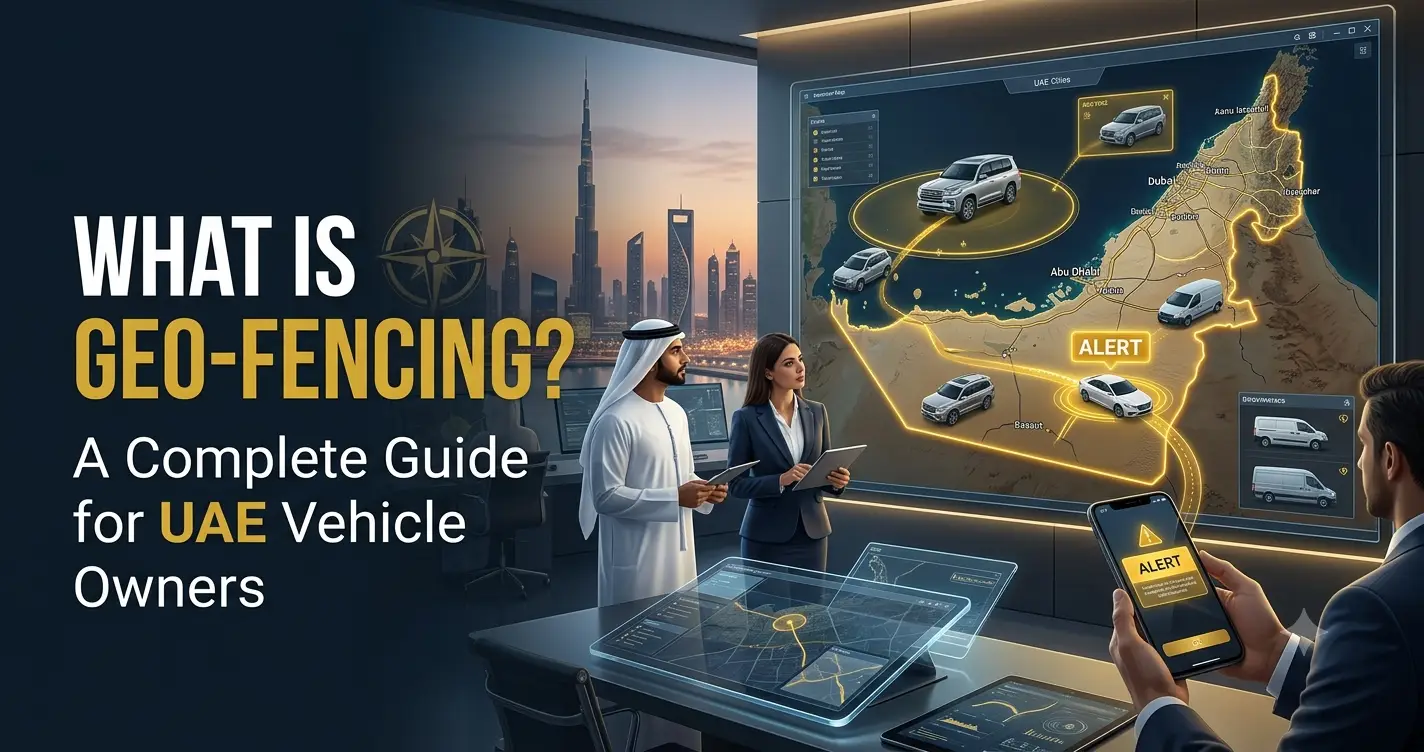
A logistics company in Jebel Ali sends a truck on a same-day delivery to Abu Dhabi.Somewhere along Sheikh Zayed Road, the driver takes an unexpected detour, whether for a personal errand or simply because of a wrong turn. Either way, nobody in the office finds out until the delivery is already late and a customer is calling to ask where their shipment is.
So, what is geo-fencing? It is a GPS-based feature that creates virtual boundaries around specific locations and sends instant alerts whenever a vehicle enters or exits those areas. This is the kind of everyday operational blind spot that geo-fencing was built to eliminate. Across the UAE, where fleets routinely cross multiple emirates in a single day and personal vehicles navigate everything from Dubai’s dense traffic to Al Ain’s quieter roads, knowing exactly when a vehicle enters or leaves a defined area isn’t a luxury feature anymore it’s becoming standard practice.
Why It Matters in the UAE
The UAE’s road network is unusual in one important way: it’s genuinely easy to cross an entire emirate in under an hour. A delivery van can leave Dubai, pass through Sharjah, and reach Ajman before lunch. That mobility is great for business, but it also makes it harder to manually keep track of where every vehicle actually is at any given moment, especially for companies running fleets across Dubai, Abu Dhabi, and the Northern Emirates simultaneously.
Geo-fencing solves this by eliminating the need for constant manual monitoring. Instead of watching a live map all day, fleet managers receive automatic alerts only when a vehicle enters or leaves a designated area.
Instead of a dispatcher watching a live map all day, the system watches it for them and only speaks up when something needs attention.
How It Works
Once a geo-fence is created, the Vehicle tracking system continuously monitors the vehicle’s location in real time. The virtual boundary can be placed around any location, such as a warehouse in Jebel Ali, a construction site in Sharjah, a residential community, or an entire delivery zone.
Whenever a vehicle enters or leaves the virtual boundary, the system automatically sends an instant alert through the vehicle tracking mobile app or web dashboard. This allows businesses and vehicle owners to respond quickly without constantly monitoring the vehicle’s location.
How Geo-Fencing Triggers Instant Alerts
The GPS unit records the vehicle’s coordinates, speed, and timestamp at regular intervals throughout the day, whether the vehicle is on Sheikh Zayed Road or navigating a residential street in Al Ain.
1. Create a Virtual Boundary:
Inside the tracking app or web dashboard, you mark out a zone, a simple radius around a point, or a custom shape following a road, district, or property line.
2. Assign Vehicles:
The geo-fence can be linked to a single car or be applied across an entire fleet, depending on what you’re monitoring.
3. The GPS Tracker Device Tracks the Vehicle’s Location Continuously:
As the vehicle moves, its live coordinates are compared against every active geo-fence tied to it.
4. The System Sends an Instant Alert:
As soon as the vehicle crosses the geo-fence by entering or exiting the designated area, the system instantly sends a notification through the mobile app, SMS, or WhatsApp.
There’s no need to manually refresh the system or constantly monitor the vehicle. Alerts are sent almost instantly when the boundary is crossed.
Common Types of Geo-Fences
Geo-fences can be created in different ways depending on how and where a vehicle is being monitored. Here are the most common types used by businesses and vehicle owners in the UAE.
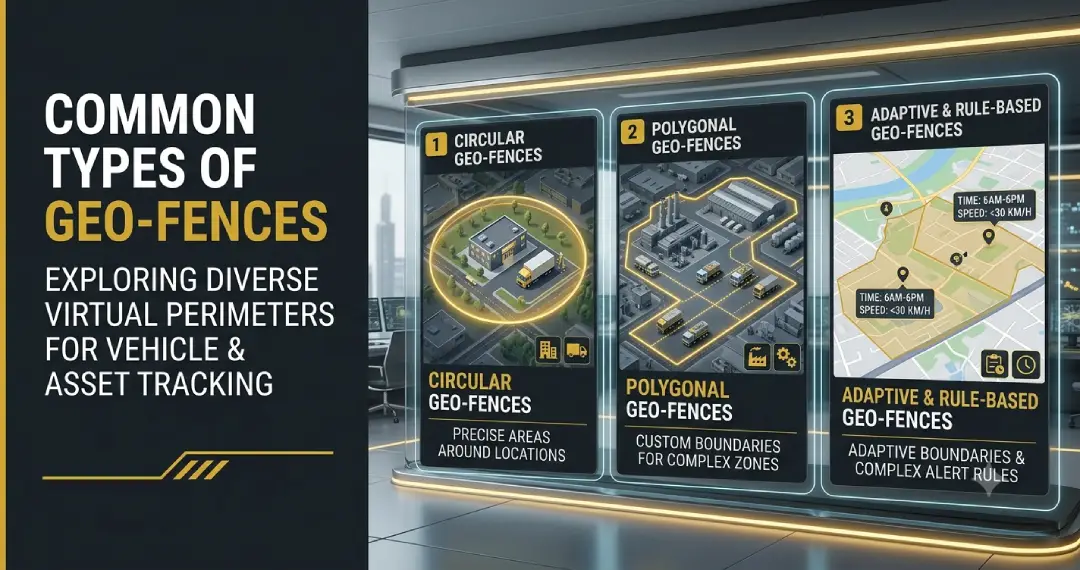
1. Fixed-Point Zones:
A virtual boundary created around a warehouse, showroom, office, or home. It helps you know exactly when a vehicle enters or leaves the location.
2. District or Emirate-Wide Zones:
These larger geo-fences cover an entire district or emirate, helping businesses know when a vehicle leaves its approved operating area.
3. After-Hours Restrictions:
Geo-fencing can be combined with working hours to send alerts whenever a vehicle moves outside approved times.
4. Route Corridors:
A virtual boundary follows an expected delivery route, sending an alert if the vehicle makes a significant detour.
Benefits of Geo-Fencing for UAE Businesses & Vehicle Owners
No matter which type of geo-fence you use, the goal is the same: better visibility, improved security, and greater control over your vehicles.
1. Tighter Operational Control:
Fleet managers overseeing vehicles across Dubai, Abu Dhabi, and Sharjah get a real-time signal the moment a truck or van leaves its designated coverage area long before it becomes a customer complaint or a compliance issue.
2. Stronger Vehicle Security:
For private car owners, a geo-fence around the home or workplace acts as an early warning system. If a vehicle moves without authorization, you’re notified immediately rather than discovering it hours later.
3. Reduced Unauthorized Use:
If a company vehicle is used outside approved areas or working hours, the system immediately alerts the owner or fleet manager, helping prevent unauthorized use.
4. Support for Regulatory & Client Reporting:
Businesses operating under UAE transport and logistics requirements benefit from accurate, timestamped records of vehicle movements. These records are more reliable than manual driver logs and make reporting much easier.
4. Faster Incident Response:
Whether it’s a vehicle leaving a secured yard after hours or straying from a job site in Sharjah’s industrial zones, geo-fencing shortens the time between something going wrong and someone finding out.
How Geo-Fencing Is Used Across the UAE
1. Logistics & Last-Mile Delivery:
With e-commerce and food delivery volumes continuing to climb across Dubai and Abu Dhabi, dispatchers use geo-fencing to ensure vehicles stay within assigned delivery areas and receive alerts if drivers take unexpected detours that could affect delivery times.
2. Construction & Heavy Equipment:
Job sites across Sharjah, Ajman, and Abu Dhabi’s industrial zones use geo-fences to detect unauthorized movement of vehicles and machinery outside working hours, helping reduce the risk of equipment theft or unauthorized use.
3. Corporate & Executive Fleets:
Companies managing pool cars or driver-assigned vehicles use geo-fencing to confirm vehicles stay within approved operating areas, supporting both cost control and duty-of-care obligations.
4. Private vehicle Owners:
A geo-fence around your home or your teenager’s school is a simple, low-effort way to stay informed about vehicle movement without checking the app every few minutes.
Why Choose Najoom Al Thuraya for Geo-Fencing in the UAE?
Managing vehicles across the UAE requires a GPS tracking solution that is accurate, reliable, and easy to use. Najoom Al Thuraya provides geo-fencing as a standard feature with its GPS tracking platform, helping businesses and vehicle owners monitor vehicle movements with confidence.
Whether you’re overseeing a delivery fleet in Dubai, managing service vehicles in Abu Dhabi, or tracking a personal car in Sharjah, our geo-fencing solution sends instant alerts whenever a vehicle enters or leaves a designated area. Combined with an easy-to-use mobile app, a web dashboard, and responsive local support, it gives you greater visibility, improved security, and better control over your vehicles every day.
FAQs
Final Thoughts
Geo-fencing is more than just a tracking feature. It helps businesses improve fleet visibility, strengthen vehicle security, reduce unauthorized use, and respond faster when something unexpected happens. For UAE businesses managing fleets across multiple emirates, and for individual vehicle owners looking for greater peace of mind, geo-fencing is a simple feature that delivers lasting value.
Ready to put virtual boundaries around what matters most? Get in touch with Najoom Al Thuraya UAE today and start monitoring your vehicles with geo-fencing built for how the UAE actually moves.