

Delivery Motorbikes with Abu Dhabi Number Plate: What You Need to Know
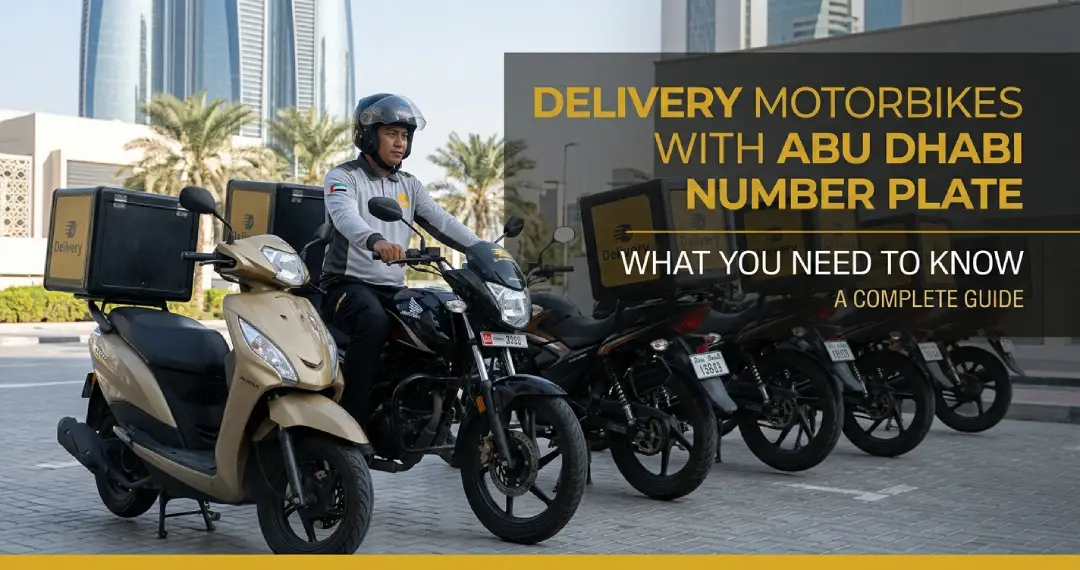
If you run a delivery business in Abu Dhabi, or you’re planning to start one, this guide will walk you through everything you need to know about delivery motorbike rules in a simple way.
Motorbikes are everywhere in Abu Dhabi these days. They carry your food orders, your groceries, your parcels, and important documents across the city, often in a hurry. But here’s something many people don’t realize: a motorbike used for delivery work is not treated the same as a motorbike someone uses just to get around personally.
Abu Dhabi has put specific rules in place for delivery bikes. These cover things like a special number plate, certain roads they can’t use, safety requirements, and more. If you’re running a delivery fleet, knowing these rules isn’t optional, it’s part of doing business the right way.
Why Do Delivery Bikes Have a Different Number Plate?
Starting January 2025, Abu Dhabi Mobility rolled out a new rule: motorbikes used for business or delivery work now need a yellow number plate instead of the standard red one used by private motorbikes.
Why yellow? Because it makes commercial bikes instantly recognizable. A police officer, an inspector, or even another driver on the road can immediately tell a delivery bike apart from someone’s personal motorbike.
This isn’t just a cosmetic change. It helps the authorities keep better track of how many delivery bikes are on the road, who’s operating them, and whether businesses are following the rules. It also plays a role in improving road safety, since delivery bikes tend to spend far more hours on the road each day than personal ones.
If your business owns or manages delivery bikes, make sure they’re properly registered with the correct yellow plate. If you’re transferring ownership of a bike, replacing a lost or damaged plate, or registering a brand-new one, it needs to carry this yellow plate.
What Else Do Delivery Businesses Need to Follow?
Getting the right number plate is just step one. There’s more involved in running a compliant delivery operation:
- You need the correct business permits and work authorizations for your riders and vehicles.
- Every bike used for delivery needs to be properly registered.
- Bikes must meet basic technical and safety standards.
- An approved GPS tracking device needs to be fitted to the bike.
That last point is worth pausing on. Yes, it’s a requirement but it’s also genuinely useful for you as a business owner. With tracking installed, you can actually see where your bikes are at any given moment and get a sense of how your riders are moving through the city during their shifts.
Road Restrictions for Delivery Motorbikes
Here’s one of the most important updates for anyone running a delivery fleet in Abu Dhabi: since May 15, 2026, delivery motorbikes are no longer allowed on roads where the speed limit is 120 km/h or higher.
This also includes a specific stretch of Sheikh Zayed Street, the part running between Sheikh Zayed Bridge and Sheikh Zayed Tunnel.
Why the change? Fast-moving highways can be dangerous for two-wheelers sharing the road with cars and trucks travelling at high speed. This rule is meant to keep riders safer while also helping traffic move more smoothly overall.
For business owners, this means your delivery routes need a second look. If your riders have been used to cutting through fast highways to save time, they’ll need new routes now. Sending someone down a restricted road isn’t just risky it can also lead to delays and put your business at odds with the rules.
Rider Safety Comes First
Delivery riders have a tough job. They’re out in traffic for hours, dealing with heat, rain, aggressive drivers, and tight delivery windows all at once.
Because of this, Abu Dhabi has continued rolling out safety campaigns aimed specifically at protecting riders. Around June 2026, there were public safety awareness efforts encouraging safer riding habits among delivery workers though we’d recommend checking with Abu Dhabi Mobility directly for the exact details of any specific campaign, since these initiatives are updated fairly often.
Some simple but important habits riders are encouraged to follow:
- Stick to traffic rules and stay in the correct lane.
- Don’t use a phone while riding.
- Always wear proper safety gear.
- Keep the bike in good working condition.
- Avoid riding in heavy rain or bad weather, since wet roads make it much easier to skid or lose control.
If you manage a team of riders, it’s worth reminding them of these basics regularly, not just once when they’re hired.
The Delivery Box Has Rules Too
Even the box attached to the back of a delivery motorcycle has to meet specific requirements. Abu Dhabi’s regulatory guidance states that the motorcycle delivery box should not exceed 50 cm × 50 cm. It must also have illuminated sides, red and white reflective stickers, suitable insulating material, no sharp edges, and a solid, secure mounting to the motorcycle frame.
These requirements are designed to improve visibility, protect the rider, and keep transported goods secure.
If you manage several bikes, it’s a good idea to check delivery boxes regularly, just as you would check tyres, brakes, and other safety equipment.
How GPS Tracking Actually Helps You
If you’re only managing two or three bikes, you can probably keep track of things yourself. But once you’re running a fleet of ten, twenty, or more riders across the city, that becomes nearly impossible without help.
This is where a good GPS tracking system earns its keep. Here’s what it typically lets you do:
- See live locations: Know exactly where each bike is at any moment.
- Check route compliance: Confirm riders aren’t accidentally (or intentionally) using restricted roads.
- Get speeding alerts: Find out immediately if a rider is going too fast.
- Set up geofencing: Get notified if a bike enters or leaves a specific zone.
- Review trip history: Look back at old routes and stops if there’s a complaint or delay to investigate.
- Catch unauthorized use: Know right away if a bike is being used outside working hours without approval.
- Spot inefficiencies: Notice patterns like unnecessary stops or routes that waste time.
- Plan maintenance ahead of time: Track how much a bike is being used so small issues get fixed before they become expensive ones.
Basically, instead of relying on phone calls and guesswork to figure out what your riders are doing, everything becomes visible from one screen.
A Quick Checklist Before You Put a Bike on the Road
Before any delivery motorbike heads out in Abu Dhabi, run through this list:
- Does it have the correct yellow commercial number plate?
- Are all required permits and work authorizations in place?
- Does the bike meet safety and technical standards?
- Is the delivery box the right size and built correctly?
- Is an approved tracking system installed?
- Do your riders know which roads are currently restricted?
- Is the bike getting regularly inspected and maintained?
- Are routes planned to avoid restricted roads?
- Have riders been reminded of basic safety practices?
Going through this list regularly, not just once will save you from a lot of headaches down the line.
FAQs
Final Thoughts
Abu Dhabi’s rules around delivery motorbikes exist for good reason to make the roads safer for everyone, including the riders themselves. The yellow number plates make it easy to spot commercial bikes, the new road restrictions cut down on serious risks, and the equipment standards protect both riders and the goods they’re carrying.
If you’re running a delivery business, staying compliant is only part of the picture. Pairing that compliance with good fleet visibility through GPS tracking, regular checks, and clear communication with your riders makes a real difference in how smoothly and safely your operation runs.
As Abu Dhabi’s delivery industry keeps growing, businesses that stay on top of both the rules and their fleet management will be the ones that run more safely and more efficiently in the long run.