

OBD vs Hardwired GPS Trackers in the UAE: Which Is Better?
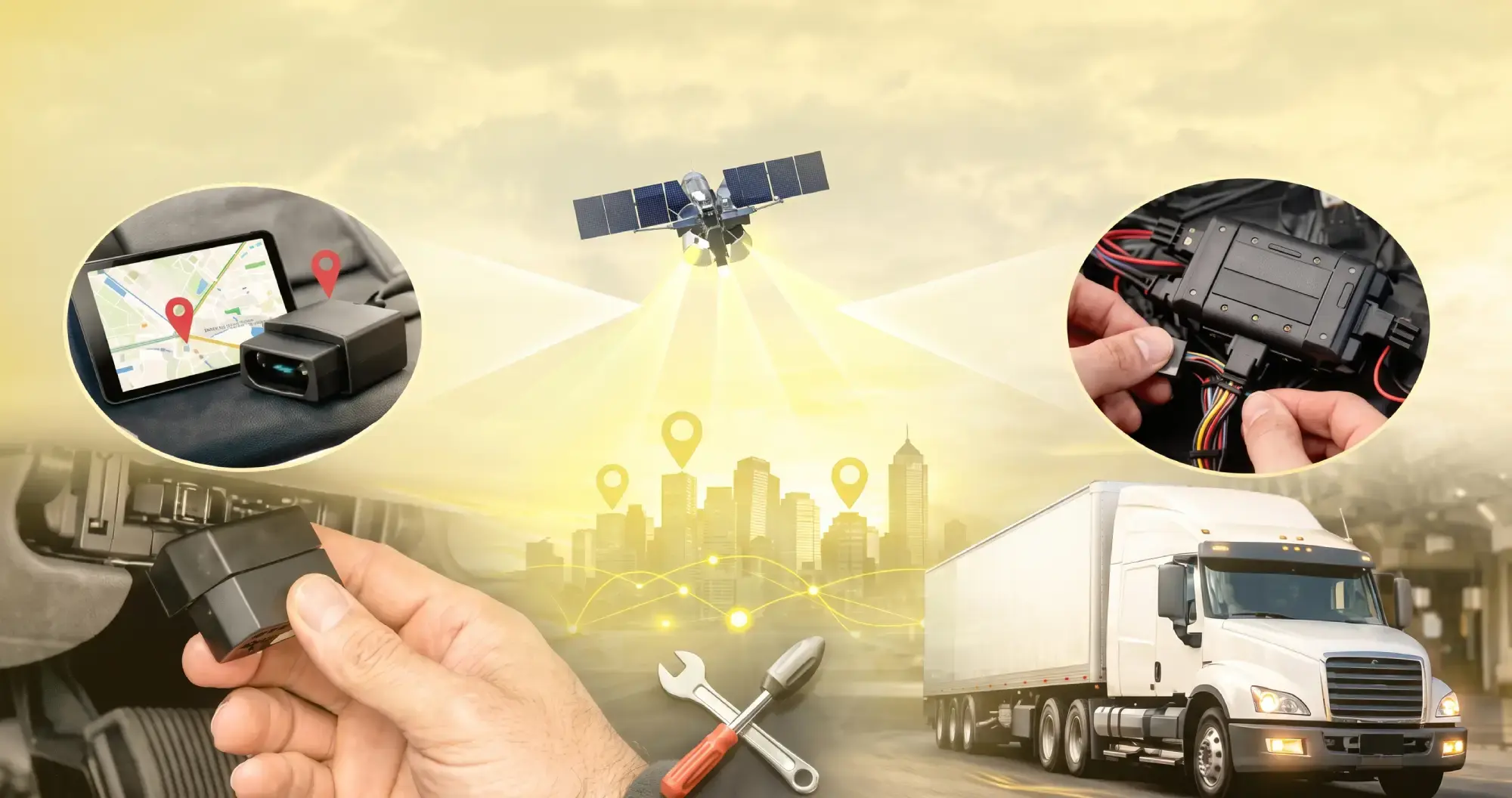
Choosing between OBD vs hardwired GPS trackers in the UAE depends on your vehicle, security needs and budget. OBD trackers are easy to install and move, while hardwired trackers offer a more discreet setup. Learn how they compare in features, cost and installation to find the right fit for your vehicle or fleet.
What is an OBD Vehicle Tracker?
An OBD GPS tracker connects to a car’s diagnostic port.
- Extra data: Some models can report further data, according to the specific car and tracker, including engine diagnostics and battery charge level.
- Where it connects: OBD-II ports are commonly found on the dashboard under the driver’s side on many modern cars. It depends on the vehicle and the tracker if it will be compatible.
- How it works: An OBD tracker draws power from the vehicle, connects to a cellular network, and reports its location.
- Setup: Typically requires no tools or permanent connections to the vehicle (though activation is dependent on the supplier).
What is a Hardwired GPS Tracker?
A Hardwired GPS tracker is hard-wired to the vehicle’s power supply.
- Where it connects: Usually to the vehicle’s power supply and ignition system.
- Who installs it: Technicians normally install a hardwired tracker, typically hidden out of view, behind the dashboard, within a panel or beneath a seat.
- Visible: Once installed, a hardwired tracker is not seen from the front of the dashboard, ensuring discretion.
- Add-ons: Can be connected to an immobiliser relay, a door sensor or a panic button, if the tracker and vehicle are compatible with such add-ons.
Installation: Plug-and-Play vs Professional Fitting
1. OBD trackers: simple and portable
- Just find the diagnostic port, plug in the device and activate it.
- Installation often takes only a matter of minutes.
- Can be moved from one, compatible vehicle to another with ease.
- Suitable for: People who frequently change cars, or who lease or own vehicles for short terms, or operate multiple vehicles from different locations.
2. Hardwired trackers: neat and stable
- Require a professional fitting, which takes more time. A poor installation can drain a battery or lead to unreliable readings.
- Once installed, it provides a stable, secure and discreet location without the risk of a faulty port connection.
Leasing a vehicle? Check your contract first. Some leasing companies restrict modifications to their cars, so you may wish to confirm with your provider before any modifications are carried out to the vehicle.
Security: Which One Is Harder to Tamper With?
1. OBD trackers: convenient but exposed
Usually installed in an obvious, accessible location (OBD-II ports are commonly known and can be found easily). As such, it can be removed by anyone who knows or guesses where the OBD-II port on their vehicle is located. Many OBD trackers offer an unplug alert that will notify you if the device is removed. However, a determined thief may locate and remove the tracker.
2. Hardwired trackers: more discreet
Generally speaking, it is harder to spot and remove and, therefore, more secure. Some hardwired trackers offer a disconnect alert if the vehicle battery has been disconnected. Some have a backup battery, allowing the device to continue reporting a location for a short time after the vehicle battery has been disconnected. These functions are dependent on the tracker and should be requested before buying.
Features: What Can Each Tracker Do?
1. Basic features on most trackers
- Live location and route history
- Speed and movement alerts
- Geofencing, an alert when the vehicle leaves or enters a specified location
- Trip reports and time of stops
2. OBD tracker features
Depending on the model, may report diagnostic information about the vehicle and driving patterns, including harsh braking and acceleration. This can help owners identify potential issues and promote safer driving practices with staff, or provide value to drivers of leased or rented vehicles.
3. Hardwired tracker features
Better suited to more complex add-ons. Depending on the tracker model, vehicle compatibility and a correct, professional installation, you may be able to connect:
- Fuel sensors
- Temperature sensors for refrigerated vehicles
- Driver ID readers
- A remote engine cut-off feature
Cut-off features should only be used in accordance with any applicable safety requirements and ideally fitted by a qualified installer.
Not every device does everything, so make sure to check what features apply to your tracker and the needs of your situation.
OBD vs Hardwired GPS Tracker Costs: Beyond the Device Price
Costs vary by supplier, model and service plan, so it is best to ask for a clear quote.
- Ongoing costs: Most services offer a data plan or subscription for the online platform that provides the vehicle tracking functionality or access to the data.
- OBD trackers: Generally lower upfront cost, as there is no installation charge. Can be portable, so you can take the tracker with you if you sell the vehicle.
- Hardwired trackers: The initial cost may be higher because you pay for both the tracker and its installation. However, it can be a good choice for businesses that use the same vehicles for many years.
GPS Tracking for Cargo and Vehicle Security
Many transport jobs deal with high-value or time-sensitive cargo, such as electronics, medical equipment, and perishable foods. Location tracking provides an extra layer of security in such cases, as it allows the dispatcher to know whether the vehicle has deviated from the planned route. This is especially important for high-value cargo. Depending on the system, the dispatcher may receive an alert in case of:
- Unauthorized vehicle movement
- Suspicious stops and deviations outside of working hours
In case of theft or hijacking, the information about the vehicle’s last known location may come in handy. Tracking can also be used to prevent unauthorized use of the company’s vehicles, and the recorded data serves as proof of delivery, which is reassuring for both parties.
Questions to ask a supplier:
- What is the cost over the period I am likely to use the tracker?
- What warranty and support is offered?
- What happens if the device is damaged or needs replacement?
Best Use Cases: Which Should You Choose?
1. OBD may suit you if:
- You want to monitor a family car or driver.
- You lease or rent vehicles frequently and require a portable tracker.
- You manage a small fleet of newer vehicles and want a relatively quick and easy setup.
- You want to access driving behaviour and basic vehicle health data.
2. Hardwired may suit you if:
- Theft prevention is your primary objective.
- You operate commercial vehicles, trucks, or heavy vehicles.
- You require sensors, driver identification or, where applicable, immobilisation.
- You need a long-term, secure installation that is harder to remove.
3. Practical examples: OBD vs hardwired in the UAE
- Catering company, Abu Dhabi: Three vans. Using OBD trackers to ensure delivery routes and timings, without the cost of fitting.
- Logistics company, Jebel Ali: Refrigerated trucks. Hardwired units can connect to temperature sensors and remain discreet.
UAE-Specific Considerations
- Heat: Summer temperatures can be very hot for sensitive electronics and vehicles. Ensure that the tracker is fit for the environment and ask the supplier about the operating conditions.
- Long drives and remote terrain: Many residents travel between emirates, or into the desert and mountainous regions. Connectivity can be spotty in remote areas, so ask about how the device performs if there is a loss of signal. Many devices store the data and transmit it when the signal is regained.
- Fleet and rental activity: With a busy delivery, logistics and car rental market, many businesses use trackers to optimize routing, reduce idling time and monitor vehicle usage. Reports on stops, speed and mileage can help to support day-to-day operations.
- Regulations: Rules on vehicle tracking, driver privacy and commercial vehicles can change and vary across emirates and industries. If you are tracking vehicles driven by employees, it is good practice to inform them. Check current requirements against the relevant authorities or your provider before installation.
Choosing the Right GPS Tracker with Najoom Al Thuraya
OBD trackers offer a portable and accessible option, whereas hardwired can offer greater security and flexibility. The better option depends on your own vehicle, budget and goals.
Contact Najoom Al Thuraya to discuss your needs and request a quote for your GPS vehicle tracking requirements in the UAE.